Family learning · Parent guide
Carnatic music classes for children
A good first class makes music approachable. Here’s what children learn, how to choose a teacher, and how to keep practice enjoyable.
An educational resource, not a class listing. LakshyaPrep’s music programs are not currently open for enrollment.
What is Carnatic music?
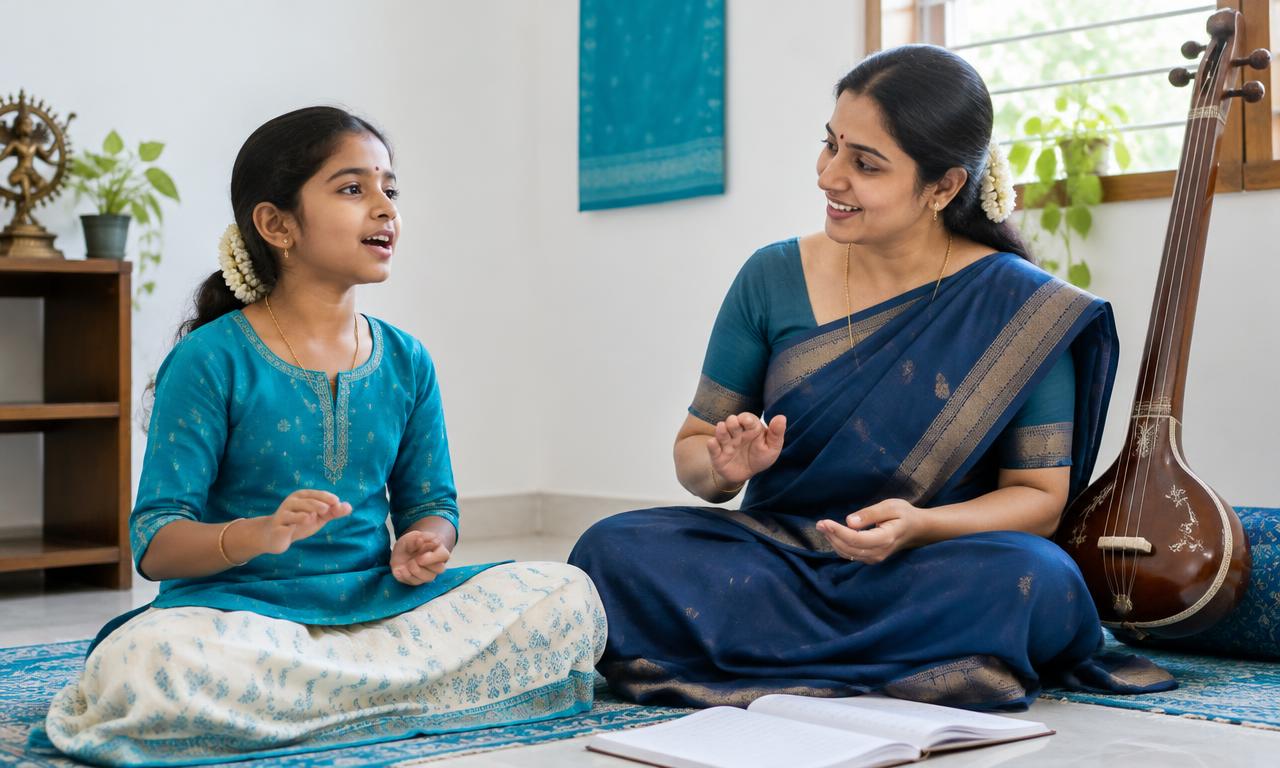
Carnatic music is South Indian classical music. Melodic learning centres on raga; rhythmic learning uses repeating cycles called tala. Children learn to listen, sing note patterns and keep a steady beat. The NCERT music chapter introduces these ideas with a Carnatic composition.
What beginners learn
Early vocal lessons often combine swaras—Sa, Ri, Ga, Ma, Pa, Dha, Ni—with simple ascending and descending patterns. Teachers introduce pitch, listening and rhythm gradually. Some begin with Mayamalavagaula and Adi tala, an eight-beat cycle. Approaches vary; ask the teacher to explain their sequence.
The National Arts Centre’s Carnatic teacher resource offers introductory raga, tala and singing exercises.
- Listening and matching a comfortable starting pitch.
- Repeating short note patterns, sometimes called sarali exercises.
- Keeping tala while singing at a manageable speed.
- Learning short songs as the teacher judges readiness.
Benefits without exaggerated promises
Music lessons offer practice in careful listening, rhythmic coordination and musical expression. They also give families a way to explore a living cultural tradition. Small musical goals—singing a phrase clearly or keeping a cycle steady—can make progress tangible.
Do not choose classes on promises of higher intelligence or exam scores. One study of young children and Carnatic training reported improvements in mathematical ability. That result does not guarantee academic gains for an individual child. Choose music for its musical and personal value.
Choosing a teacher
Look for patient instruction, clear feedback and age-appropriate expectations. A trial lesson can help you assess fit before committing. Ask these questions:
- What experience do you have teaching children who are beginners?
- How do you adapt pitch and lesson pace to each child?
- What should we practise between lessons?
- Can a parent observe, and how will you share feedback?
- What are the fees, cancellation terms and recording permissions?
- How do you support a child who feels shy or frustrated?
Verify a teacher’s background directly. A polished listing is not proof of teaching quality.
Online or in-person lessons?
Consider your child’s attention, travel needs and access to a suitable teacher. For online lessons, test audio before committing. Ask how the teacher handles connection delays, pitch feedback and turn-taking. Agree who may record lessons and where recordings are stored.
For either format, prioritise a comfortable singing range and a supportive environment. Singing should not hurt; stop if it does and seek appropriate advice.
A gentle home-practice routine
Agree a short routine with the teacher rather than imposing a universal timetable. Listen to the assigned phrase, sing it slowly, then practise keeping its rhythm. End with something your child enjoys. Praise effort and attentive listening, not comparison with other children.
A suggested starting point is one manageable exercise and one familiar song. Let the teacher set the duration and pitch. Avoid rushing into advanced pieces or increasing speed before the pattern feels secure.
Questions parents ask
What age is best to start?
There is no single age that suits every child. Interest, comfort singing and ability to follow a short activity matter. Ask a teacher to assess readiness in a trial lesson.
Do beginners need an instrument?
Ask before buying anything. A vocal teacher may recommend a pitch reference or a simple practice aid. Instrumental lessons have different equipment needs.
How much do classes cost?
Fees depend on the teacher, location and lesson format. Request a written quote with lesson length, group size and cancellation terms. This guide does not advertise a music-course price.
What should we do next?
Shortlist teachers, ask the questions above and arrange a trial. Afterwards, ask your child what felt enjoyable and what felt difficult. Choose a pace that leaves room for curiosity.